1 Peter 5:1-7 (Mid-America Baptist Theological Seminary 5/3/2016)
2 Comments
My daughters like routine. Especially, when that routine involves doughnuts.
Whenever they spend time with grandparents, I head to the local doughnut shop to buy breakfast before they leave.
To get there, I turn left out of our neighborhood onto a four-lane state highway. The turn can be tricky if traffic is heavy. Sometimes, I need to drive into the turn lane and then ease my way into traffic. I hate doing this, but this trip was during the morning rush hour. It was either creep into traffic or wait until lunch to turn left.
I was turning north, so when the southbound lanes cleared I drove into the turn lane and managed, fairly quickly, to move into the right hand lane.
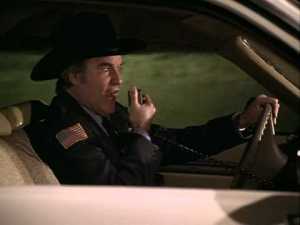
While performing my Andretti-like maneuver, I noticed a Highway Patrol car driving southbound. I looked into my rearview mirror and saw that the car was making a U-turn to drive back north. Its lights began to flash.
For some reason, perhaps latent criminal tendencies, I assumed that the officer was going to pull me over. I knew I had done nothing wrong, but I also knew that Rosco had me.

As bad as getting a ticket is, it was an even bigger deal that morning. It just happened that the previous Sunday I had preached about Christian submission to government, from 1 Peter 2:13-17. The example that I stressed was obeying the speed limit.
When I saw the patrol lights flashing, I thought, “Great, it’s Friday morning and all of South Jackson is driving to work. At least half of the church will see me pulled over after I just preached about doing the speed limit.”
In a split second, I decided to own up. Once the ticket was written, I would post about it on Facebook and Twitter and confess my sin publicly, hopefully humorously.
As my resolve steeled, the patrolman passed me and pulled over an 18 wheeler.
If I’ve ever felt that stupid, I can’t remember when.
I was innocent.
I knew I was innocent.
Yet, I acted as if I was guilty.
Paul wrote in Romans 6:8–14, “8 Now if we have died with Christ, we believe that we shall also live with Him, 9 knowing that Christ, having been raised from the dead, is never to die again; death no longer is master over Him. 10 For the death that He died, He died to sin once for all; but the life that He lives, He lives to God. 11 Even so consider yourselves to be dead to sin, but alive to God in Christ Jesus. 12 Therefore do not let sin reign in your mortal body so that you obey its lusts, 13 and do not go on presenting the members of your body to sin as instruments of unrighteousness; but present yourselves to God as those alive from the dead, and your members as instruments of righteousness to God. 14 For sin shall not be master over you, for you are not under law but under grace (NASB).”
As Christians, we understand that we have been freed from the power of sin.
We are free.
We know we are free.
We act as if we are slaves.
If you have surrendered your life to Christ, then you have been freed from the power of sin. This freedom means that each sin we commit comes about because we have decided to sin. God, through the Holy Spirit, has freed us to choose not to sin. We know this. We just don’t act like it.
We also understand that we are not perfect. We will continue to sin until we are with Jesus. But, that general truth is no excuse for our specific sin.
Live free from fear of condemnation because Christ has freed you.
Live free from guilt of past sin because Christ paid the price.
Don’t let the sin you see in the rear Read More
I never did well with organized sports. The few times I played, I was frustrated with the coaches. I didn’t like them telling me what to do. I think that’s why I was so happy when I discovered nine ball when I was eleven years old. No one, other than myself, told me to practice. Plus, every loss or victory was mine alone.
This stubbornness causes me to need to know reasons behind instructions or commands. Fortunately, the Bible teaches that God’s commands aren’t based on a whim. Rather, biblical ethics reflect God’s nature.
For instance, why is murder wrong? It’s illegal, of course. But, God’s word gives us more insight than just “don’t do it.” We are told in Genesis 9:6 that murder is wrong because man is created in God’s image. The command not to kill is based on God’s character, which is displayed in the image of God in man.
Why is adultery wrong? Is it just because it’s a terrible thing to do? It certainly is terrible, but the reasons are deeper. Marriage, we are told in Ephesians 5, is a picture of Christ and the church. Adultery violates that picture. Jesus would never be unfaithful to His bride, the Church.
I’ve been trying to apply this thinking to the question of premarital sex. I’ve always been frustrated with the typical evangelic approach. It has always seemed to me that we only tell our kids not to have sex because it’s wrong, without giving the reason. We warn them against pregnancy and sexually transmitted diseases. And, we have mistakenly equated self-worth and being a good marriage prospect with technical virginity. Of course, all of these things are a part of this question, but they are not the main issues.
If we are going to tell our teenagers, young twenty-somethings, or even adults facing a second marriage, that premarital sex is wrong, then we need a better reason that just “don’t do it because it’s bad.” We need to understand why it’s wrong theologically.
Ephesians 5:22-33 is the foundational passage for marriage. In this paragraph, Paul teaches that marriage pictures the relationship between Christ and the church. Husbands are to love their wives as Christ loved the church (v. 25). Wives are to be subject to their husbands, just as the church is to Jesus (vs. 22-24).
In verses 5:28-31, Paul writes, “28 So husbands ought also to love their own wives as their own bodies. He who loves his own wife loves himself; 29 for no one ever hated his own flesh, but nourishes and cherishes it, just as Christ also does the church, 30 because we are members of His body. 31 FOR THIS REASON A MAN SHALL LEAVE HIS FATHER AND MOTHER AND SHALL BE JOINED TO HIS WIFE, AND THE TWO SHALL BECOME ONE FLESH (NASB).”
The church is the bride and body of Christ. We see Paul express this by quoting from Genesis 2:24, which records Moses’ commentary on Adam and Eve’s marriage. In both places, married couples are described as being one flesh. This bond pictures the union of Christ and the church, as Paul described 5:28-31.
We find guidance about the wrongness of premarital sex in the phrase “one flesh.” This phrase has many aspects, but one of those facets is the sexual union of husband and wife. Sex portrays the one flesh relationship. Paul would say in 1 Corinthians 6:16. “Or do you not know that the one who joins himself to a prostitute is one body with her? For He says, ‘The two shall become one flesh (NASB).’”
So, if marriage is a picture of Christ and the church, then what part of that picture does sex within marriage represent? It represents the church’s intimacy with Christ. The church is His body. He loves us and cherishes us. The church, made up of individual believers, has intimacy with Christ because we are His flesh, His body. Sex in marriage, therefore, symbolizes that intimacy.
Premarital sex, then, is seeking intimacy without the one flesh marriage relationship. It ruins the picture of Christ and the church. Instead, it represents a desire and searching for spiritual intimacy outside of God’s plan. That is, outside of Christ.
We call this false worship.
Or, if you prefer, idolatry.
This truth was regularly preached by the Old Testament prophets. They equated the sin and rebelliousness of Israel, God’s people, with spiritual adultery.
We would never encourage one another to participate in open idolatry. The idea of worshipping a statue or making a human sacrifice seems completely ridiculous. But how often do believers live out 21st century paganism through premarital sex?
This principle doesn’t just apply to teenagers dealing with raging hormones. It also applies to the young couple in their 20s, or the older couple about to undertake their second marriage.
Warnings against premarital sex aren’t just about keeping our daughters from becoming moms and our sons from becoming fathers. It is about faithfully worshipping God with our sexuality. If we participate in this behavior, we are participating in idolatry.
In 1 Corinthians 6:9-11, Paul wrote, “9 Or do you not know that the unrighteous will not inherit the kingdom of God? Do not be deceived; neither fornicators, nor idolaters, nor adulterers, nor effeminate, nor homosexuals, 10 nor thieves, nor the covetous, nor drunkards, nor revilers, nor swindlers, will inherit the kingdom of God. 11 Such were some of you; but you were washed, but you were sanctified, but you were justified in the name of the Lord Jesus Christ and in the Spirit of our God (NASB).”
Sexual sin, like any sin, is forgivable. As Christians, we understand that Christ died for all of our sins. Yet, we also know that sin can negatively impact our relationship with Jesus. When we confesses sin, we aren’t seeking to be saved from that sin. Jesus already paid the penalty. In confession, we acknowledging to God that our behavior has fallen short of His glory. We repent by stopping the sin. The confession breaks down sin’s wall of separation.
If you, a Christian, are guilty of the sin of premarital sex, then confess the sin to God and stop. The Holy Spirit lives in you, so you have the power to quit. In some cases, such as sex and pornography addictions, you may need further help. But generally, Christians have the spiritual ability to walk away from sin.
Your worth is determined by how God values you. If you have repented of this sexual sin, then don’t let guilt or stigma hold you back.
God loves you, despite your past.
His desire is for you to have great future.

Ecclesiastes 3:11 (NLT) — 11 Yet God has made everything beautiful for its own time. He has planted eternity in the human heart, but even so, people cannot see the whole scope of God’s work from beginning to end.
Some cite man’s idea of Heaven as proof of its existence. They argue that eternity with God is something we would not make up. The idea would be cruel, in their minds, if it wasn’t true.
Eternity is indeed written on the human heart. World religions address the afterlife. The non-religious often hold to a squishy hope-so view of forever. Others, however, take a different approach.
Science Fiction, whether books, film, or television, is my favorite genre. It allows its creator to wrestle with ideas outside of those ideas’ natural confines. It is much easier to write about race when the conflict is human versus alien rather than black versus white. It’s natural that eternity would also be a science fiction topic.
Isaac Asimov, Arthur C. Clarke, and Robert Heinlein are generally considered the giants of 20th century Science Fiction. I recently read Asimov for the first time and thoroughly enjoyed Foundation. Heinlein’s Starship Troopers and The Moon is a Harsh Mistress have also challenged and entertained. Clarke was my introduction to the genre.
If you’ve never read Clarke, you may have seen his collaboration with director Stanley Kubrick. Together they created 2001: A Space Odyssey. The theme of eternity ran throughout the movie and its accompanying novel. Dave Bowman’s rebirth as the star-child, indicated that man would exist forever through evolution.

Kubrick and Clarke
Clarke wrestled with the same theme in an earlier novel, Childhood’s End.
The book tells the story of an alien invasion of earth. The novel begins with the tension of the 1950s space race. That competition ends when alien ships, possessing far greater technology than any nation, suddenly appear over the world’s major cities. Man stops looking to the stars because he is clearly outgunned.
Spoiler Alert: Any Further Reading Reveals Critical Plot Details
At the outset, the alien’s presence brings peace and prosperity. Nations forget old grievances. Alien technology, on loan from the Overlords (the alien’s official title), improves the world’s economic standing. Hunger, poverty, war, disease, and virtually all evils, are eliminated.
There is one problem. The aliens initially refuse to be seen by humans.
The Overlords wait several generations to reveal their appearance. When they do emerge, they look like Satan, as depicted in religious art. The Overlord’s shocking look is accepted because they have successfully debunked all religions.
Clarke was no fan of Christianity.
The last third of the book focuses on two children, whose parents have moved to an artistic community on a Pacific island. The son begins to have dreams of other worlds and his little sister, still in the crib, develops telepathy. The siblings are the first of a large scale step towards the next phase in evolution. This change takes place only in children. Through the eyes of the final living adult, we see the completed evolution of earth’s children, their merging with the cosmic conscience, and the complete destruction of earth.
Clarke was a brilliant author and scientist. No one can deny his intelligence and imagination, but his conclusions about eternity and “what’s out there” have always puzzled me.
In 2001: A Space Odyssey, Clarke and Kubrick conjectured that aliens could have been the cause of evolution and man’s advancement. In Childhood’s End, Clarke presents an underwhelmed opinion of mankind. In this view, home sapiens are incomplete. They must take the next step.
Because God has written eternity on each person’s heart, if a person rejects a biblical worldview, he will create his own idea of forever.
Clarke opted for aliens, or a cosmic consciousness. Eastern religions expect oneness. Muslims regard Heaven as an oasis.
All this hypothesizing is a result of the marred, but retained, image of God in man. God created man to have an eternal relationship with Him, but when Adam ate of the fruit we all fell into sin. Sin affects all areas of our lives, including thinking. So, brilliant folks like Arthur C. Clarke conclude, “It must be aliens.”
When you and I understand that God created us to know Him, and that through Christ we can do so, eternity takes care of itself. Aliens and evolution are not needed. Man is God’s ultimate creation. We might be a bit messed up, but if we know Him, we’re getting better.
I’m sure I’ll continue to read Mr. Clarke. But, as I do, I pray that I’m reminded that even the brilliant are often spiritually blind.
I recently jumped on the bandwagon and reread To Kill A Mockingbird.
I first read the book in seventh grade, so I was surprised at how many scenes and bits of dialog I knew. Little details were just as I remembered, like Bob Ewell’s embarrassment at the reading of his name in court.
But, a thirty eight year old reads differently than a twelve year old. Experience and circumstances made several things to stand out.
For one, I now appreciate what a good father Atticus was to Scout and Jem. Atticus Finch, augmented by Gregory Peck’s movie portrayal, modeled the patient and fair, yet understanding, father. It seems that much of Go Set A Watchman’s controversy revolves around the novel’s differing version of Atticus. As a father, I now appreciate the patience and care that Atticus showed to his children.
Or, with four daughters being homeschooled in the classical tradition, I could talk about the novel’s opinion of home versus public schooling. This conflict erupts on Scout’s first day of school. Her teacher, newly trained in the Dewey method, tells Scout that Atticus couldn’t have possibly taught her to read since he had not be trained properly. I highlighted entire pages to show my wife.
But, the thing that really stood out to me was the novel’s condemnation of ultra-fundamentalist religion and its view towards women.
Miss Maudie, whom I didn’t remember at all, was a neighbor and longtime friend of the Finch’s. She was especially fond of Atticus’ brother Jack. Early in the novel, during the mission to lure out Boo Radley, Scout asked Miss Maudie if she thought Boo was still alive. They began to talk about the Radley family and Miss Maudie commented on their religious choices.
“Miss Maudie settled her bridgework . “You know old Mr. Radley was a foot-washing Baptist—”
“That’s what you are, ain’t it?”
“My shell’s not that hard, child. I’m just a Baptist.”
“Don’t you all believe in foot-washing?”
“We do. At home in the bathtub.”
“But we can’t have communion with you all—”
Apparently deciding that it was easier to define primitive baptistry than closed communion, Miss Maudie said: “Foot-washers believe anything that’s pleasure is a sin. Did you know some of ’em came out of the woods one Saturday and passed by this place and told me me and my flowers were going to hell?”” (59)
Scout was confused, but Miss Maudie explained that the foot-washers believed she spent too much time outdoors with her flowers and not enough time inside reading her Bible. Scout protested and said that Miss Maudie was the best lady she knew.
“Miss Maudie grinned. “Thank you ma’am. Thing is, foot-washers think women are a sin by definition. They take the Bible literally, you know.”” (59)
While I certainly think the Bible should be taken literally, after all so did Jesus, I don’t understand those who use a literal interpretation to make women into second class Christians.
Later in the novel, Scout and Jem attended church with their housekeeper, Calpurnia. Her pastor, Reverend Sykes, voiced familiar views about women.
“His sermon was a forthright denunciation of sin, an austere declaration of the motto on the wall behind him: he warned his flock against the evils of heady brews, gambling, and strange women. Bootleggers caused enough trouble in the Quarters, but women were worse. Again, as I had often met it in my own church, I was confronted with the Impurity of Women doctrine that seemed to preoccupy all clergymen.” (162)
I have often marveled at the connection between fundamentalism and the suppression of women. I would hope that those who rightly believe the Bible to be the inerrant, inspired, and infallible Word would also understand its teachings about women.
Paul wrote in Galatians 3:23–29, “23 But before faith came, we were kept in custody under the law, being shut up to the faith which was later to be revealed. 24 Therefore the Law has become our tutor to lead us to Christ, so that we may be justified by faith. 25 But now that faith has come, we are no longer under a tutor. 26 For you are all sons of God through faith in Christ Jesus. 27 For all of you who were baptized into Christ have clothed yourselves with Christ. 28 There is neither Jew nor Greek, there is neither slave nor free man, there is neither male nor female; for you are all one in Christ Jesus. 29 And if you belong to Christ, then you are Abraham’s descendants, heirs according to promise (NASB).”
Certainly, the Bible is specific about male and female roles. Ephesians 5 and Genesis 2 are clear. But, those roles do not define a person’s worth. Jesus retained His deity and position in the Godhead while obeying the will of Father. A wife who follows the leadership of her husband does not lose spiritual significance.
Rather, the Bible is clear that both male and female are created in God’s image.
Genesis 1:27 says, “God created man in His own image, in the image of God He created him; male and female He created them (NASB).”
At this point you may be saying, “I don’t oppress women,” or “I wouldn’t put up with the kind of attitudes you’re talking about.”
I hope you are saying that, but I want us to think a bit deeper about how we treat women, especially our younger women.
Take, for instance, the Purity movement. Beginning in the 1990s, churches encouraged teenagers to take a pledge of sexual purity before marriage. The well-intentioned goal of the Purity movement is to provide a safe outlet for teens to openly express their commitment to waiting.
I, of course, believe that sex was created for marriage. There is a subtle danger, however, in this movement.
In her book, Faithful: A Theology of Sex, Beth Felker Jones, argues that sexual purity is not about being faithful to your future spouse. Rather, the more important aspect of sexuality is faithfulness to God.
Felker listed what she believes to be the understood rules of the purity movement. First, those who take the pledge should expect to get married as a reward for obeying the rules. Second, a person must work diligently to retain virginity before their wedding night. Third, Felker believes the purity movement assumes that its cause is more important for girls than boys. Fourth, physical virginity makes a person pure. (84)
Felker criticized the first rule by writing that Christianity is not about following rules, rather it is about grace. Also, she wrote that these assumptions deny the value of those who live as single Christians. (85)
Regarding the second rule, or what she calls “teeth-gritting” effort, Felker wrote, “This teeth-gritting, desperate waiting also tends to create atrophied and legalistic definitions of what sex is. The purity paradigm turns sexual intercourse into the ultimate act that two human beings can engage in. This creates damaging cycles of behavior in which couples committed to ‘waiting’ for marriage escalate physical intimacy in every way possible while avoiding actual intercourse.” (86-7)
Felker responded to the purity movement’s unstated focus on girls by writing, “Not only does this belief make our bodies out to be merchandise, it makes female bodies into merchandise in a special way. Male bodies, maybe, can be seen as human, as personal, and the tangible lives of human beings who bear the image of God, but female bodies are downgraded. Women and girls here are treated as property and our bodies are placed on the market.” (87)
She wrote that the fourth rule, which attaches purity to physical virginity, “makes virginity into a thing that one needs to cling to in order to retain value. It tells the graceless lie that we are more valuable spouses for someone if we have this thing. It tells the demonic lie that our market value is what makes us precious to God.” (91)
These attitudes and beliefs are exhibited when men criticize women for dressing provocatively. Some Christian men actually blame their lust on women. Modesty is important and biblical, but a man’s sin is his own responsibility.
Men, how about we look the other way. Or, choose not to dwell on sinful thoughts. If we are truly Christians, then the indwelling of the Holy Spirit and the promise of 1 Corinthians 10:13 leave us no excuse and do not allow us to blame others for our sin.
In her final chapter, Felker summarized, “Healthy, happy, holy sexuality – lived in married faithfulness and celibate singleness – is an emblem in this world of the relationship God has with his people. As God is faithful to us, our faithful bodies testify to his faithfulness. Our faithfulness is possible only by grace, only by the power of the Holy Spirit indwelling us. The faithful body is visible in the world as a testament to who God is and to what God can do.” (95)
For some reason, which I will never understand, God gave me a house full of women. With one wife and four daughters, conservative Christianity’s failings toward women are important to me.
Do I want my daughters to live with sexual purity? Absolutely.
Do I want my marriage to be one of faithfulness? Of course.
But, purity and faithfulness do not increase anyone’s worth in God’s sight.
Rather, purity honors God and His holiness and faithfulness.
I’m sure Miss Maudie would agree.
Sources:
Jones, Beth Felker. Faithful: A Theology of Sex. Grand Rapids: Zondervan, 2015.
Lee, Harper. To Kill A Mockingbird. New York: Harper Collins, 2006.
This past Friday, the Supreme Court made gay marriage the law of the land. States must now issue marriage licenses for gay couples and honor homosexual marriages from other states.
As Bible-believing Christians, we agree that gay marriage is contrary to God’s Word. God’s pattern, shown in Adam and Eve, is for one man and one woman to be married for life.
The Apostle Paul tells us that marriage is a picture of Christ and the Church. In Ephesians 5:22-27 he wrote, “22 Wives, be subject to your own husbands, as to the Lord. 23 For the husband is the head of the wife, as Christ also is the head of the church, He Himself being the Savior of the body. 24 But as the church is subject to Christ, so also the wives ought to be to their husbands in everything. 25 Husbands, love your wives, just as Christ also loved the church and gave Himself up for her, 26 so that He might sanctify her, having cleansed her by the washing of water with the word, 27 that He might present to Himself the church in all her glory, having no spot or wrinkle or any such thing; but that she would be holy and blameless.”
While it is certainly true that the Bible teaches heterosexual marriage only, it also true that heterosexuality is not the single defining characteristic in a Biblical marriage. We Christians must be careful, and introspective, when we say we support Biblical marriage.
I would argue that many support Biblical marriage in word only, not in practice. We rightly say that we oppose two men or two women marrying, but we also must ask if our own marriages are Biblical.
Husband, do you love your wife as Christ loved the church? Are you the spiritual leader of your home?
Wife, are you following the spiritual leadership of your husband? Paul’s command to your spouse is for him to love you. Paul’s command to you is to respect your husband. Ephesians 5:33 says, “33 Nevertheless, each individual among you also is to love his own wife even as himself, and the wife must see to it that she respects her husband.”
Our opposition to gay marriage is weak if our marriages are unbiblical.
A henpecked husband is unbiblical, yet we laugh at his situation.
A beaten down wife is tragic, yet we often look the other way.
Our marriages only reflects Christ and the church when we fulfill our God-given roles as husband and wife.
Many have wondered how we are to respond to the event of the past few days. The most productive thing we can do is to live out Biblical marriage. We can’t control anyone else’s relationship. But we, as a husbands and wives, can ensure that our marriages are Biblical.
Do you support Biblical marriage?
Is your marriage Biblical?

Today is National Signing Day.
It’s interesting that a qualifier isn’t necessary. We all understand that high school athletes are signing with colleges to play sports. These kids deserve admiration. Each one has natural talent, but that only goes so far. Many talented high school athletes never ran across a college field. Those who sign today have also worked hard to earn the opportunity.
As much as I admire these kids (and we would all do well to remember that they are kids), I can’t help but notice all this attention is a bit out of balance.
We are used to headlines like: UT Snags Top Five Recruiting Class or Saban and The Tide Reload.
How would we react to this headline: UT Signs Five Star Mechanical Engineering Prospect or Experts Name University of Memphis Incoming Education Majors the Best Ever—Possible Dynasty
Consider a few statistics from the NCAA.
According to statistics found here (http://www.ncaa.org/about/resources/research/probability-competing-beyond-high-school), only 6.5% of high school football players will play college ball. 1.6% of those players will go on to the pro level. In men’s basketball, 3.3% make it from high school to college. 1.2% of college basketball players will play pro hoops.
Now math was not my strongest subject, but I’m pretty sure these numbers mean that only a tiny fraction of athletes, including those signing today, will ever make a living at their sport.
So, where am I going with this?
We’ve made heroes out of athletes. If a child is talented and skilled enough to play at the college level, then they have probably been highly esteemed for that talent and those skills for many years. They may have even enjoyed celebrity status among their peers and in their community.
Please hear me. I’m not saying that athletic scholarships and our admiration of these students is wrong.
What I’m saying is that there are just as many academically and artistically talented students, but I’ve never heard of a national signing day for criminal justice majors.
And, what about that solid B student who works hard, does the best they can, and goes on to be a success in their chosen field. Shouldn’t we admire their tenacity as much as we admire talent?
Most importantly (and this applies to the athletes, brains, and “normal” kids), what about their character?
Do these teenagers emulate Christ with their goals and actions?
Does the wide receiver practice his routes, not just for the coach, but for God’s glory?
Does the future educator spend hours on class projects because of potential influence on non-Christian students?
Does the future mechanical engineer slave over equations because all truths, even those holding up a bridge, are God’s truths?
Are your children great athletes? If so, I hope they work hard and reach their full potential. But one day, they won’t be able to run quite so fast, jump quite so high, or see the baseball quite so clearly.
Are your children gifted academically or artistically? I hope they will be able to use those talents to their utmost. But, someone will always be smarter, someone will always be more insightful artistically, and someone will always achieve greater things.
I’d just like to see us all keep these things in balance.
Let’s teach our children and grandchildren that their worth is in being created in God’s image.
This image provides the talent and ability we celebrate.
Let’s celebrate it for the right reasons.
1 It is a trustworthy statement: if any man aspires to the office of overseer, it is a fine work he desires to do. 2 An overseer, then, must be above reproach, the husband of one wife, temperate, prudent, respectable, hospitable, able to teach, 3 not addicted to wine or pugnacious, but gentle, peaceable, free from the love of money. 4 He must be one who manages his own household well, keeping his children under control with all dignity 5 (but if a man does not know how to manage his own household, how will he take care of the church of God?), 6 and not a new convert, so that he will not become conceited and fall into the condemnation incurred by the devil. 7 And he must have a good reputation with those outside the church, so that he will not fall into reproach and the snare of the devil. – 1 Timothy 3:1-7 (NASB)
October 12, 2014 was one of those Sundays.
It began at 8:30 in the sanctuary with the deacons. We were celebrating the Lord’s Supper that morning and needed to review assignments.
Next, I taught for one of our adult Sunday school teachers. I accused him of ducking out on purpose, since the text was Hebrews 6:1-8.
The worship service included a short-ish sermon from Romans 8:9-11, to prepare us for the Lord’s Supper. The ordinance was a worshipful time.
After lunch at home with Donna and the girls, I headed back out for a hospital visit.
Later that afternoon, I officiated a wedding.
Leaving the wedding, I managed to walk into our evening service after the opening welcome. Fortunately, by God’s grace I believe, we had a guest speaker.
I finished the day with our monthly deacon’s meeting.
It was one of those Sundays.
I’m not sure what I was doing on October 12, 2004. But, I do know it wasn’t anything like 2014. In October 2004, I was a third year seminary student, occasionally filling the pulpit at my home church and others. Just over a month later, my life changed.
Ten years ago tomorrow, November 21st, 2004, I began my ministry as the pastor of Fellowship Baptist Church in Bartlett, TN.
Reflecting on these ten years it is so obvious how God has blessed me. He has given me a great family and two great churches.
I am most grateful for Donna’s support during this first decade. For six of these ten years, I was a student. My life was late nights, early mornings (sometimes back to back), and impending deadlines. She always encouraged me. And, even more than that, she proofread all of my papers. That poor woman has reviewed class presentations, seminar papers, and a dissertation. In the midst of supporting me, she has been a godly mother to our four girls. I thank God for Donna.
My family has a lot do with any success I’ve had since 2004. Donna, the girls, and I would not have been able to do much of what we’ve done without my parents and Donna’s.
When I began seminary, I didn’t know anything about anything. The professors at Mid-America taught me how to be a pastor. I’m especially grateful for Dr. Tim Seal and Dr. Jere Phillips.
Other pastors have had a large impact on my ministry. John Allen gave me many opportunities to preach and minister, while being an example of a true shepherd. Chuck Herring and Danny Sinquefield continue to be friends and mentors. I owe much to these men.
I can never fully express my gratitude towards the people of Fellowship Baptist. I was honored to be their pastor for 8 ½ years. They endured my early preaching and pastoral ministry with grace and encouragement.
It was at Fellowship that I learned to love people. Our Associate Pastor, David Bock, constantly reminded me that our calling is always about people. This lesson can’t be learned in a seminary classroom. It’s learned in the hospitals, the funeral homes, and the personal conversations. God taught me that through David.
Because of what God taught me at Fellowship, when the time came, I was ready to embrace another group of God’s people. When others ask me about Meridian Baptist Church, I always say that I could not have handpicked a better situation. The church has embraced my family and me. I’m blessed to be the pastor.
When God moved us from Bartlett to Jackson, His plan for our lives varied from His normal design. Fellowship and Meridian are quite different. In fact, whenever I tell other preachers about the change in my ministry their reaction is normally, “really, you almost never hear about that kind of move.” I have no explanation for why God chose to do this, but I’m grateful that He entrusted me to shepherd Meridian.
This first decade has convinced me of two things.
First, pastoring is as much about presence as anything. People invite me into the most important events in their lives. I’ve held newborn children and stood bedside as loved ones passed away. I’ve led people to Christ and hurt as church members grieve over lost family. I’ve performed weddings and listened to marital difficulties. In all of this, I don’t always know what to say. I do know, however, that being there is more important than words.
Second, there is no substitute for expository preaching and teaching. I’m sure I’m leaving something out as I think about this, but I know I’ve preached through Luke, James (3 times), Colossians, Malachi, Ephesians, Genesis, John 1-5, John 13-17, Haggai, Ezra and Nehemiah, 1 and 2 Thessalonians, 1 Peter, and 1,2, 3 John. Plus teaching through, either during Sunday school or on Sunday or Wednesday night, Exodus 1-21, Joshua, Judges, Ruth, 1-2 Samuel, 1-2 Kings, Daniel, Acts, 1 Corinthians, Galatians, and Revelation. Plus, preaching non-series expository messages from many other Bible books.
God has used and continues to use this teaching and preaching to change lives. The Bible transforms us. It convicts the sinner and grows the saint. I’ve had countless conversations with God’s people about Him using His Word to encourage, challenge, and convict them. I merely report what God has said. He does the changing. I am so grateful for my calling to bring His message to His people each week.
So, ten years down and however many more to go.
I can’t wait to see what He’s going to do in this next decade.
If the Lord is willing, I will be preaching from 1 Samuel 3 this Sunday night.
While working through the text this Monday, I remembered something that I hadn’t thought about lately.
This text played a significant role in my call to the ministry.
Here’s what happened.
It was late summer 2002 and Mark Margis was serving as youth pastor at my home church. Our pastor, John Allen, asked Mark to preach on a Sunday night. His text was 1 Samuel 3.
Well, wouldn’t you just know that I was struggling with a call to ministry?
Mark preached about the call of God in the believer’s life. He made me absolutely miserable. I actually felt sick.
And no, it wasn’t because Mark is from Arkansas. He can’t help that.
In fact, it wasn’t Mark at all. I’ve since come to understand that God was using His Word to show me His will for my life.
God was calling me to the ministry. Specifically, he was calling me to be a pastor.
As Mark preached, God’s will became clear. But to do His will, I had to tell Donna, quit my job, and go to seminary. What if Donna wasn’t willing? What if we starved to death? What if I was a rotten preacher? What if? What if? What if?
Time may have condensed a few of these memories, but it seems like a few days later, at Olive Garden (breadsticks make everything easier), I told Donna that God was calling me into the ministry.
Would you believe she already knew and didn’t tell me?
The nerve of that woman.
So, the Sunday after Olive Garden, Donna and I told our family and I made my call public on a Sunday night.
About six weeks later, I began working on my M.Div. at Mid-America Baptist Theological Seminary.
Now, twelve years later, I have been a pastor for almost ten years and I can’t imagine doing anything else.
Thank God for preaching that makes people sick and miserable.
The above title is an actual song about Ted Turner—the king of cable.
Well, at least he was in the early 1980s.
I don’t remember life before cable, but I do remember my parents having cable installed. We had a channel switching box that sat on top of the television. If you moved the button at the perfect speed, you could scan the channels and find something to watch in one smooth motion. I mastered the move.

Cable meant that we had access to the best cultural programming possible.
That’s right.
I could watch professional wrestling from all over the country.
The channel changing box eventually wore out and a cable ready TV with remote control took over. Cable, with its 50 plus channels, continued to dominate. Only the socially rebellious allowed those oversized saucer-shaped satellite dishes in their backyards. Those home owners probably voted Independent.
But, satellite would not be denied. When Donna and I moved from an apartment to our first home in 2001, a much smaller saucer was attached to the south side of the house.
Next, this thing called a TiVo showed up. You could record and watch your shows when you wanted. I’ve never known an Enoch, by blood anyway, who could program a VCR, so TiVo was liberating. Of course, every service now offers DVR.
In the spring of 2013, Donna and I found ourselves in an interesting position. We had been kicking around the idea of cancelling our satellite service. Netflix allowed the girls to watch just about anything they wanted. With services like Hulu and network websites, Donna and I could watch new shows shortly after broadcast.
Once we knew we were moving to Jackson, we made the call and cancelled satellite.
This cancellation prompted an immediate trip to Best Buy. Network television began to broadcast digitally not too long ago. To watch it, you need a digital antenna. No rabbit ears in the twenty first century. The antenna is just a flat box, about the size of a large piece of pizza.
In Bartlett, the antenna picked up about twenty stations in HD. At our rental house in Jackson, we received five channels. Our new home, south of our church’s neighborhood, picks up three.
Now, none of this bothers me. The only time I really miss satellite is during football season. I have to watch whatever CBS shows. On Saturday, that’s fine. The SEC is on. On Sunday, it’s not fine. The Titans are on.
So, why all this rambling about the history of my television viewing?
Let me tell you what happened this past Sunday.
I had the house all to myself. Donna and the older two were at camp with the church and the younger two were with my parents. After church, I decided to eat my lunch in the living room. I turned on the TV to see what was playing on the three channels our antenna receives.
What I found to watch was amazing.
This blond headed guy was really excited about what he could do for me. He was offering free television. Can you imagine that? We could have TV for free. I only needed to order their digital antenna and hook it up to my set. He promised me that I wouldn’t have to pay a dime for any of the programming.
He was correct.
I was watching him, for free, through the exact medium he was peddling.
My biggest frustration was that no one was home to experience this irony with me. (Hence, this blog.)

Guess who showed up on my Facebook page while I was writing the first draft of this post?
Free television has always been around. We just walked away from it when Ted Turner started showing the Braves and Georgia Championship Wresting.
Haven’t we all been down this road before?
Have we made a complete circle?
The commercial fails to mention that the viewer has no control over the programming. They can only watch what’s on. How many people paid $19.99 without realizing this? I’d hate to know.
While I admire the seller’s marketing ingenuity, the whole situation makes me shake my head. They are selling people the very thing that has always been around, as if new.
Ecclesiastes 1:9–11 says, “9 That which has been is that which will be, And that which has been done is that which will be done. So there is nothing new under the sun. 10 Is there anything of which one might say, “See this, it is new”? Already it has existed for ages which were before us. 11 There is no remembrance of earlier things; And also of the later things which will occur, There will be for them no remembrance Among those who will come later still.”
This truth means that the things we experience in this fallen world are not new to the experience of humanity. The repackaging of consumer products has little eternal impact, but the same old sin and temptation with a new logo and paint job leads to death, according to James 1:15.
Every generation has been tempted to deny truth, to recognize evil as good, and to make an idol of self. None of these temptations and none of our own sinful leanings are new under the sun.
Everything old is new again.
Christians must accept that this world is not our home, even if it does offer DVR service. Through our relationship with Christ and the indwelling of the Holy Spirit, we can understand that the world offers a lie and that God provides the truth.
If we keep our eyes open and fixed on the author and finisher of our faith, then we will see these old things for what they are and avoid the traps reset for each generation.
The packaging may be new, but the dangers, deceptions, and consequences are the same.
 johnenoch